Large Looking Pimple on Baby Skin on Stomach
Many things can cause a rash in babies and children, and they're often cypher to worry virtually.
Every bit a parent, you may know if your kid seems seriously unwell and should trust your own judgement.
Rash with a high temperature
Rash on cheeks with high temperature
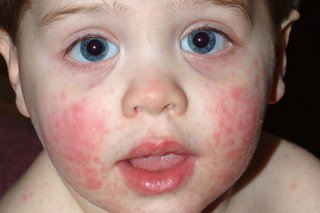
A rash on i or both cheeks plus a loftier temperature, runny nose, sore pharynx and headache may be slapped cheek syndrome. After a few days, a rash may appear on their body.
Slapped cheek syndrome usually gets ameliorate on its own inside iii weeks. Children's paracetamol or ibuprofen tin bring down a high temperature.
Blisters on hands and feet plus mouth ulcers
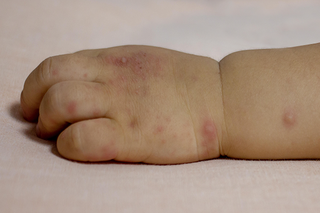
Hand, pes and mouth disease is a mutual childhood affliction that causes blisters on the easily and feet, and ulcers in the mouth. It also causes a high temperature and your child may have a sore throat.
It usually gets better in 7 to 10 days. Children'southward paracetamol tin can bring down a high temperature.
Rash on the confront and body
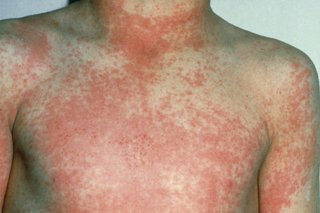
Carmine fever causes a rash that looks like pinpricks and feels rough, similar sandpaper. The rash can be blood-red, but this may exist less noticeable on brownish and black skin.
Cherry fever ordinarily starts with a white coating on the natural language, a sore throat, headache and a high temperature.
Encounter a GP immediately if you think your kid has ruddy fever. Information technology's treated with antibiotics.
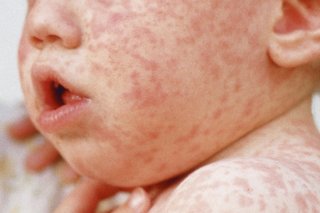
Measles ordinarily starts with the aforementioned symptoms as a common cold, plus a high temperature, sore eyes that are sensitive to light and grey spots within the cheeks.
After a few days, a spotty rash appears on the head or cervix and spreads to the residual of the body. The spots tin appear red or chocolate-brown, but they may be less noticeable on chocolate-brown and black peel.
Call a GP if you think your child has measles.
Rash with itching
Rash caused by heat
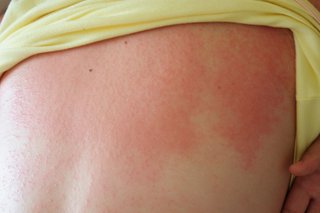
Oestrus and sweat can cause raised spots or patches known as prickly heat or heat rash. The rash tin can look cerise, just it may be less noticeable on chocolate-brown or black skin.
Information technology itches, so you may detect your child scratching.
Heat rash usually gets better on its own after a few days.
Scaly or cracked peel
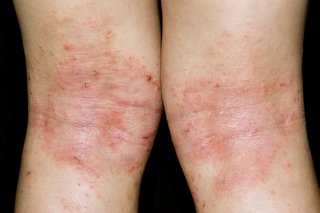
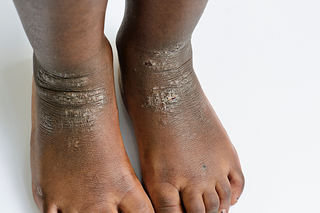
Skin that's itchy, dry and croaky may be atopic eczema. It's common behind the knees, elbows and cervix, but it can appear anywhere.
The afflicted area may change colour. On white skin, the area may look pink or red. On brown and black skin, it may wait grey or regal, or darker than surrounding skin.
Speak to a GP if you think your child has eczema.
Raised, itchy spots or patches
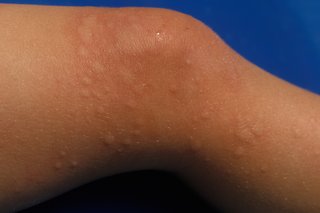
Hives causes a raised, itchy rash. It tin look red, but this may be less noticeable on brownish and blackness skin.
The rash can be a sign of an allergic reaction to things like a sting, medicine or food.
Information technology ordinarily gets better within a few days.
Speak to a GP if your child keeps getting this type of rash. They may be allergic to something.
Call 999 if there's swelling around their mouth.
Itchy round rash
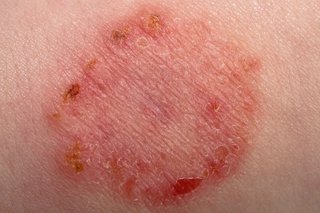
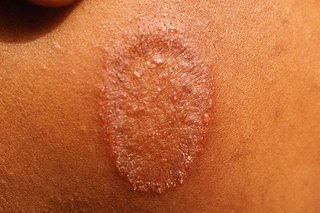
An itchy, dry out, band-shaped patch of skin may be ringworm. The patch may await red, pink, silvery, or darker than surrounding skin.
Ask a pharmacist for a foam or lotion to treat ringworm.
Speak to a GP if it appears on your kid's scalp, as information technology may need to be treated with prescription medicine.
Small spots and blisters
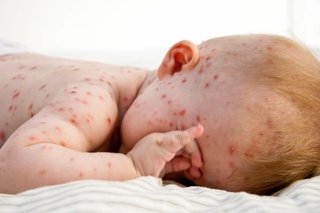
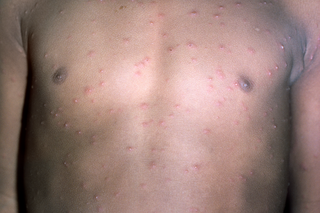
Chickenpox starts with small, itchy spots. The spots may look red, pink, the same colour or darker than surrounding peel, depending on your kid's skin tone. At the get-go, the spots may be harder to encounter on brown and black peel.
The spots speedily grade blisters and and so scabs.
Some children have a few spots, while others have them all over their body.
Itchy sores or blisters
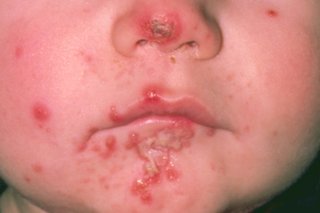
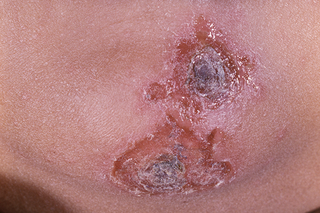
Red sores or blisters that burst and leave crusty, golden-dark-brown patches could be impetigo. The redness may be harder to come across on brown and blackness skin.
The sores or blisters can be itchy, get bigger or spread to other parts of the torso. They ofttimes announced on the face, hands or around the middle of the body.
Speak to a GP if you think your child may have impetigo.
Tiny and very itchy spots
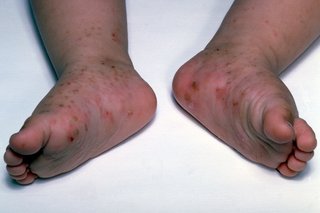
Scabies is acquired by tiny mites that burrow into the peel.
Ask a chemist for a cream or balm to care for scabies. Everyone in the household needs to be treated at the same fourth dimension – even if they exercise not have symptoms.
You should take your baby to a GP for advice if they are nether 2 months old.
Rash without fever or itching
Tiny spots on a baby's face
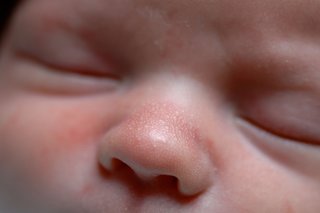
Very minor spots, called milia, often appear on a baby'due south face when they're a few days old.
Milia may appear white or yellow, depending on your infant'south skin tone.
They ordinarily become away within a few weeks and do not demand treatment.
Red, yellow and white spots in babies
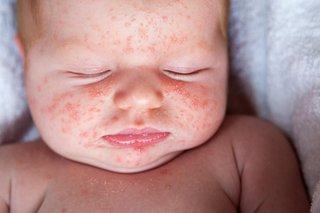
Raised ruby-red, yellow and white spots (erythema toxicum) tin can appear on babies when they're born. They usually announced on the face, body, upper arms and thighs.
The rash tin disappear and reappear.
It should get amend in a few weeks without treatment.
Pink or skin-coloured spots
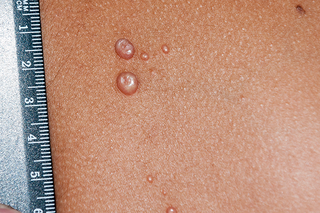
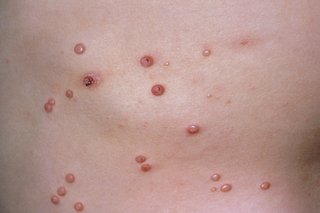
Minor, house, raised spots that can appear anywhere on the body are common in children and known equally molluscum contagiosum.
The spots can be the same color every bit surrounding skin, darker than surrounding skin, or pink.
Handling is non recommended because the spots go better on their own, although it can take more than than a twelvemonth.
Red patches on a baby's bottom
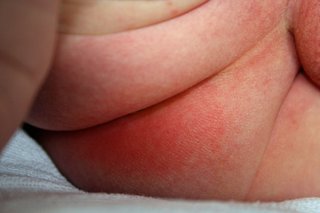
With nappy rash your baby's skin may look sore and feel hot. In that location may be red patches on your babe'southward bottom or around the whole nappy area.
At that place may be spots or blisters. It can make your child feel uncomfortable or distressed.
Y'all tin can buy cream from a chemist's to help.
Pimples on the cheeks, nose and brow
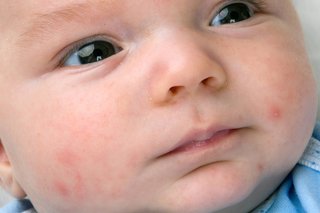
Baby acne can appear inside a month after nascence but usually gets amend later on a few weeks or months.
Washing your baby's face with water and a mild moisturiser tin help.
Do not use acne medicines intended for older children and adults.
Yellowish, scaly patches on the scalp
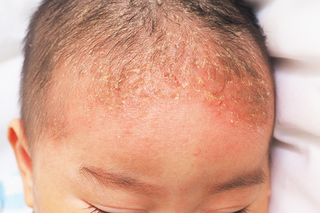
Cradle cap is when a babe gets xanthous or white, greasy, scaly patches on their scalp.
It commonly gets amend without treatment in a few weeks or months.
Gently washing your baby's hair and scalp with baby shampoo may help prevent more patches.
Help us improve
Tell the states about your experience using health services.
Take our survey
Page last reviewed: 11 June 2021
Next review due: 11 June 2024
Source: https://www.nhs.uk/conditions/rashes-babies-and-children/

Post a Comment for "Large Looking Pimple on Baby Skin on Stomach"